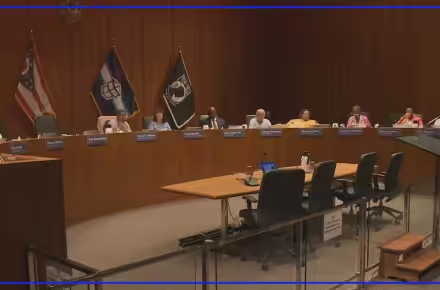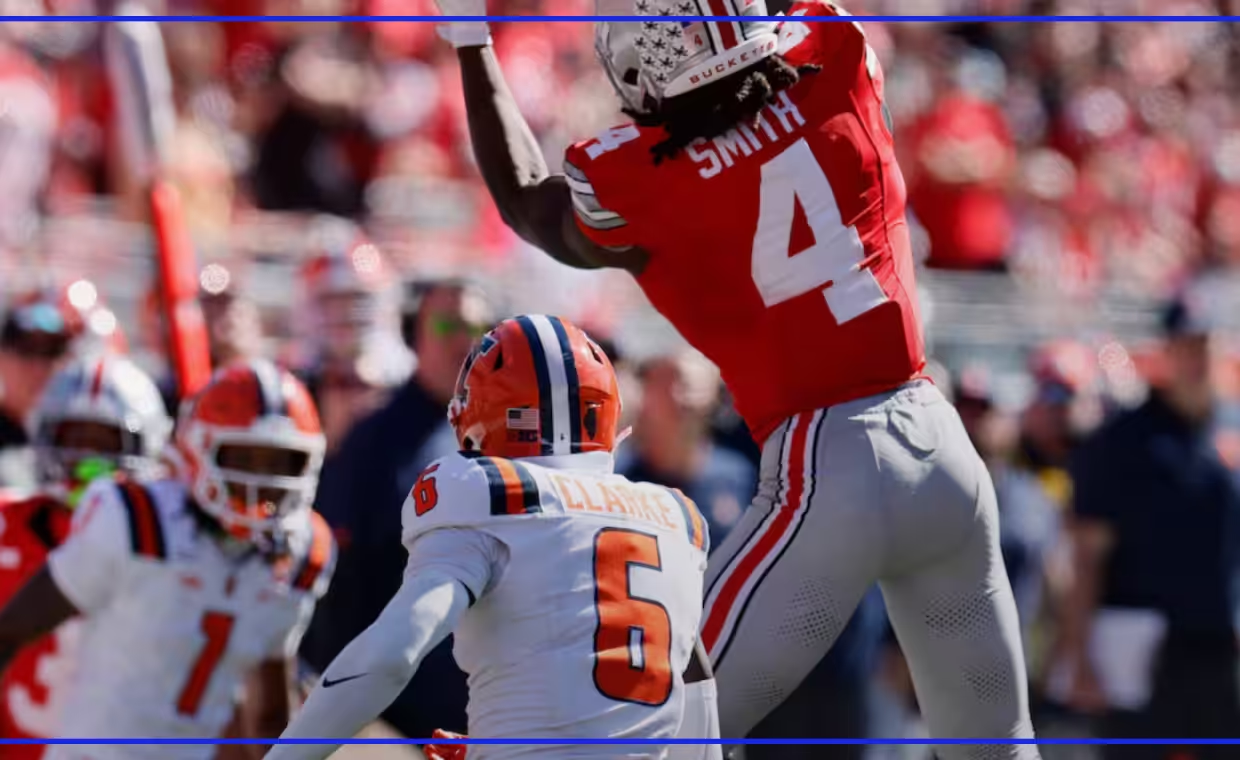
Mike DeWine signed an executive order in Ohio giving colleges the option to grant extra athletic eligibility Tuesday. The decision lets class of 2022 high school graduates play a fifth season despite national governing rules. Public and private universities across the state can now offer that extra year.
The NCAA recently issued guidance excluding players who have completed four seasons. DeWine defended the state action in a statement.
“When the rules change, fairness has to remain part of the equation,” DeWine said. “We want Ohio’s student-athletes to have the same opportunity as student-athletes in other states.”
NCAA President Charlie Baker responded in a letter sent to member schools on Tuesday. Baker said DeWine cannot legislate athletic eligibility rules.
“One elected official seeking to make their own rules for their own schools’ advantage is a terrible way to run athletic competitions,” Baker said.
Baker also urged Congress to pass the Protect College Sports Act. That bill sets guardrails on how colleges pay players. It also restricts courtroom challenges from athletes.
None of the eight Division I programs in Ohio responded immediately. Those schools include No. 4 Ohio State of the Big Ten and Cincinnati of the Big 12. Six Mid-American Conference schools are also among that group.
Lt. Gov. Jim Tressel supported the governor’s executive action. Tressel won national titles at Ohio State and Youngstown State.
“It’s important we do not deprive our current student-athletes of the same opportunities enjoyed by their peers,” Tressel said.
The executive action follows legal models seen elsewhere. California previously passed a state law opening the way for name, image and likeness compensation. Other states copied it. The NCAA eventually permitted NIL payments nationwide.
Athletes are challenging the eligibility rules in multiple courtrooms. Plaintiffs say the guidance is unfair to the class of 2022. They say it strips NIL earnings and revenue under the House settlement.
Federal judges raised questions Tuesday in the ongoing lawsuit Wisne vs. NCAA. A lower court judge had granted a fifth year to 2022 graduates. An appeals court blocked that order.
A three-judge panel of the U.S. 10th Circuit Court of Appeals heard arguments in Denver. They did not issue an immediate decision. The judges questioned plaintiff attorney Robert Shelquist about market definitions for players.
U.S. Circuit Judge Paul Kelly questioned the plaintiffs’ broad market claims.
“It doesn’t seem there’s been a definition of the market from a huge, huge division , golf, everything,” Kelly said. “And you’re lumping them all together and you never looked at commonality and interchangeability of the various buyers.”
Shelquist said an analysis by University of Mississippi legal scholar William Berry III showed the market. Attorney Rakesh Kilaru argued for the NCAA. Kilaru said the analysis lumps players together in a way that makes no economic sense.
The judges asked if they should pause for the Protect College Sports Act. The Senate passed the bill last month. Both attorneys told the court to rule quickly. Shelquist noted football is halfway over and basketball starts soon.
State court cases have continued nationwide. A Louisiana lawsuit prompted LSU to review two former NFL camp players. The NCAA has won recent cases in Kentucky, Arizona and Ohio.
Executive orders direct state agencies and establish official administrative policy within state borders. Federal appeals courts review lower court decisions to determine whether federal laws were properly applied. State universities must weigh state administrative orders against national collegiate athletic association bylaws.
The Columbus administration’s new order could lead to additional court action across Ohio sports programs.