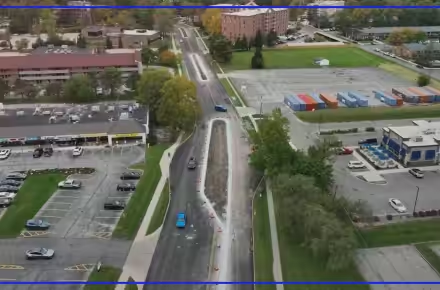
A 5,500-gallon tank at the MC Tank terminal in North Toledo released glycidyl methacrylate on Oct. 20. Lawsuits seeking class-action status now target the company and its parent. A class-action lawsuit claims MC Tank Transport failed to properly maintain the tank and its safety systems. Parent company Kenan Advantage Group is also named in the lawsuit. A second lawsuit by a Toledo resident and a landscaping company also seeks class-action status. It alleges safety failures contributed to the chemical leak.
Evacuation Timeline
- 9:30 p.m. Oct. 20: A 911 call alerts Toledo Fire and Rescue to a release from a tanker at 1266 Progress Ave.
- 10:48 p.m. Oct. 20: Firefighters order everyone within a 1-mile radius to evacuate over a threat of explosion.
- 4:24 a.m. Oct. 21: Firefighters order everyone within a 3-mile radius to shelter in place based on preliminary plume modeling.
- 5 p.m. Oct. 21: The evacuation zone is cut to a 1/2 mile radius and the shelter-in-place order is lifted.
- 10:30 a.m. Oct. 22: The evacuation zone is cut to a 1/4 mile radius.
- 6 p.m. Oct. 22: The tank stops releasing material and crews approach it for inspection.
- Noon Oct. 23: The evacuation zone is lifted.
- 7:30 p.m. Oct. 23: The site is turned over to the owners for cleanup under U.S. EPA oversight.
Toledo Mayor Wade Kapszukiewicz said an employee error caused the leak. The employee introduced a temperature to the tank during a transfer. The move triggered a chemical reaction. The company has accepted responsibility, the mayor said.
There was no fire and no explosion. The reaction has run its course, the mayor said. Venting of the tank finished late Thursday night. A hazmat team then entered the site to test safety levels. “At this time, we do feel confident that the site is safe,” Toledo Fire and Rescue Battalion Chief Blake Molnar said.
About 60 patients arrived at ProMedica hospitals for treatment. Most suffered relatively minor symptoms. A small number with underlying conditions were admitted. All patients were expected to recover, said Dr. Brian Kaminski, vice president of medical affairs for ProMedica hospitals.
Based on data seen so far, the amount of chemical in the air did not reach levels high enough to have a long-term meaningful impact on human health, the mayor said. Questions remain unanswered. The investigation is ongoing.
Cleanup Under EPA Oversight
EPA’s TAGA lab detected an extremely low level of glycidyl methacrylate. The level sat below reporting and screening levels. The lab sampled the air around the detection area for an hour after. It found no additional detections.
The lab then ran its established route through the neighborhoods. It found no glycidyl methacrylate detections. EPA and Ohio EPA have begun oversight of cleanup activities at the site. EPA created a public data viewer for air monitoring results.
The chemical is an irritant that can cause burning of the eyes, nose, mouth and skin. Symptoms of overexposure include headache, dizziness, tiredness, nausea and vomiting. The city is cleaning all playgrounds within the 3-mile shelter-in-place zone.
Ohio State University Extension recommends disposing of produce or crops that were outside within the zone. Tap water is safe. All roads have reopened. All waterways are open.
On Oct. 27, Oregon Fire Department contacted Toledo’s Environmental Services Division about a strong odor. The investigation is ongoing. It appears to be coming from a landfill in Oregon. It is not related to the chemical release at MC Terminal.
Air monitoring measures chemicals in outdoor air. Regulators compare results to health-based screening levels. Cleanup oversight means agencies supervise the responsible party’s work.
Toledo residents can call the health department hotline at 419-779-7089 for guidance. EPA air monitoring continues in the community.